
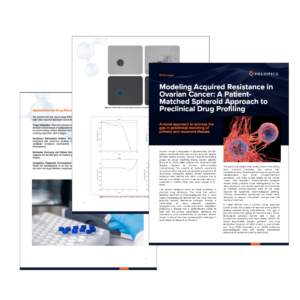
At SLAS Europe 2026, research powered by the Predictive Oncology biobank was featured in a scientific poster on integrated imaging and viability analysis of matched primary and recurrent ovarian cancer spheroids. The study used patient-matched dissociated tumor cells from the Predictive Oncology frozen biobank to generate 3D tumor spheroids, providing a clinically relevant model of how drug resistance emerges within individual patients over the course of disease. Using the Tecan Spark® Cyto imaging platform, researchers multiplexed brightfield imaging, fluorescent LIVE/DEAD staining, and CellTiter-Glo luminescence readouts on a single instrument, enabling longitudinal characterization of both spheroid morphology and viability without inter-assay variability. Results showed that recurrent cancer spheroids were measurably larger and structurally distinct from matched primary spheroids, with dose-response curves shifted for both Doxorubicin and Paclitaxel, consistent with quantitative signatures of acquired drug insensitivity. This integrated workflow demonstrates the value of the Predictive Oncology biobank as a platform for generating patient-matched, pharmacologically informative preclinical data from complex 3D tumor models.
3D Tumor Models
Modeling Acquired Resistance in Ovarian Cancer: A Patient-Matched Spheriod Approach to Preclinical Drug Profiling
Most patients with advanced ovarian cancer respond to first-line platinum chemotherapy, yet the majority recur within two years, and the returning tumor is often pharmacologically